










Follow ZDNET: Add us as a preferred source on Google.
ZDNET’s key takeaways
- Match your laptop to your college major.
- Budget, battery life, and portability matter.
- Student discounts can lower laptop costs.
Need a laptop for college but don’t know where to start? I don’t blame you — the PC industry is notorious for technical jargon and confusing product lines. Luckily, you can significantly narrow down your choices by addressing these four considerations.
We’e tested dozens of laptops this year alone at ZDNET, and have a solid understanding of which laptops are good for college since, well, we were students once, too. I’ve also considered the main factors here: portability, battery life, and, of course, price. Almost every laptop on this list is under $1,500.
Also: The best laptops of 2026: Expert tested and reviewed
Here are the big things to consider when picking out a laptop for college, and 10 recommended models that might help you narrow down your choices. Let’s run through it.
1. Determine what you’ll use it for

Microsoft Surface Pro (13-inch)
Kyle Kucharski/ZDNET
Different areas of study require different laptops. If you’re in media or design and working with graphics or video, you’ll want one that can adequately handle creative workflows. That often means spending a little more money.
Trust me, the worst thing you could do is settle for a lower-end machine that struggles to keep up with an intense workload; it’s just going to hold you back during crunch time or finals week, and dealing with tech issues is a bummer when it slows you down.
Also: How we test laptops at ZDNET in 2026
Many institutions may even require specific laptops, so be sure to check your university’s online resources, connect with a department chair, or talk with other students in your area of study.
More often than not, programs like engineering or mathematics suggest Windows PCs over MacBooks due to the particular software and programming. Regardless of which category you fall into, you’ll still want to purchase a laptop equipped to get you through the next four years (and beyond).
Go for a powerful GPU/display if you’ll be studying:
- Graphic design
- Photo editing and illustration
- Video editing
- 3D drafting
Get a powerful processor if you’ll be studying:
- Programming
- The sciences
- Game design
- Research
- Data and analytics
- Multitasking with productivity apps
- Anything else
2. Assess your budget
Lenovo ThinkPad P1 (Gen 8)
Kyle Kucharski/ZDNET
Once you’ve figured out what you’ll be doing with your new laptop, determine how much you can spend. A more expensive computer means more powerful hardware, more memory, faster processing speeds, and better displays. But of course, some models punch above their price point, while others are overpriced.
Also: MacBook Neo vs. Acer Swift Air 14: I’ve used both budget laptops – this model clearly wins
Here’s what kind of laptop you’re likely to get based on price:
- $500 or less: Budget computers and Chromebooks with limited storage and modest hardware. Best for basic use.
- $500 to $1,000: The “sweet spot” with solid machines on sale and respectable machines with a wide range of hardware. Examples include the MacBook Neo, Dell XPS 13 (2026), and Acer’s Swift Air 14 on the lower end.
- $1,000 to $1,500: The middle tier, where most new laptops can be found. These laptops are balanced enough for most users and armed with better than average hardware.
- $1,500 to $2,000: These are mid-plus laptops with upgraded components compared to the middle tier. They have better displays, more storage, and faster processors — investments that will last several years.
- $2,000 and above: This bracket includes high-end machines with state-of-the-art processors, GPUs, and expensive OLED screens and is geared toward power users and professionals.
Also: 15 of the best Prime Day laptop deals (I’d actually buy myself)
3. Get your student discount
Let’s face it: college students (or their parents) aren’t exactly made of cash. You don’t have to drop big money to get a good laptop for college because students can qualify for discounts on new laptops from almost all the major brands. I rounded up all the student discount signups from the big brands so you don’t have to.
4. Consider your preferences
Hardware aside, your personal preferences in a laptop matter. When it comes to the physical form factor, do you value portability above all else, or are you unbothered by a heavier laptop if that means a better display?
Also: The best 15-inch laptops of 2026: Expert tested and reviewed
Would you like to be able to switch your laptop to a tablet? If so, you’ll want to look at a 2-in-1, a category that has seen many really nice machines this year. We’ll break down some of the most common personal preferences and give some suggestions along the way. And whatever your preferences are, the picks below are our three favorite laptops for college overall.
The best laptops for college in 2026
The MacBook Neo is one of the best laptops you can get for college based on its sheer bang for buck. With the student discount, you can grab it for $499, and it does many of the same things a MacBook Air or Pro does. The Neo comes with less memory (8GB) and storage (up to 512GB) and a little less premium build (no keyboard lighting, a non-haptic touchpad) but it still has one of the best experiences in this price range you can get.
Review: MacBook Neo (2026)
Show more
Lenovo’s Slim 7x hits all the right notes for college students: It’s thin and light, has a marathon battery, and is versatile enough to do a little bit of everything. The Snapdragon X Elite processor is super battery-efficient but also brings enough processing power for demanding workloads. If you’re looking to spend a little more money than a MacBook Neo, the Slim 7x will last you through college (and to your high-paying job immediately after).
Review: Lenovo Yoga Slim 7x
Show more
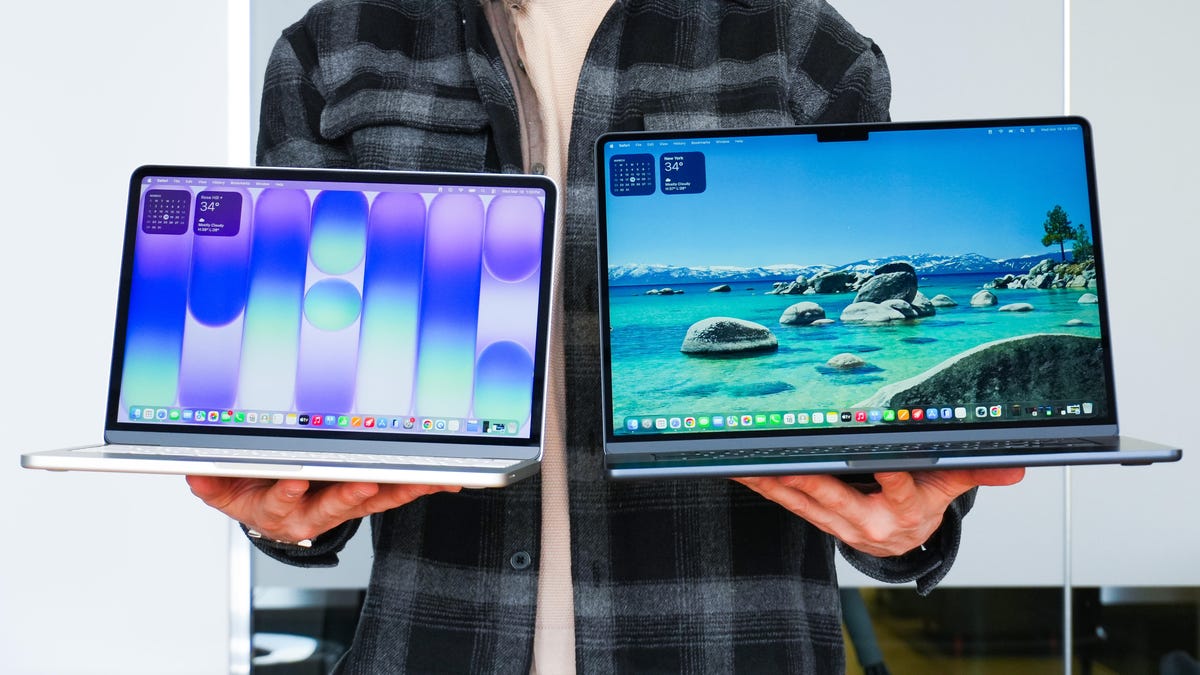
If you want something a little more powerful than the MacBook Neo (and a bigger display), the 15-inch MacBook Air from 2025 comes with a lot more memory and local storage, a brighter, higher-resolution display, and all the integrations that make MacBooks so good. Plus, the Air is lightweight enough to carry around all day.
Review: MacBook Air M4 (15-inch)
Show more
If you’re looking for a laptop that is, above all else, light and easy to carry around, there are some great options out there that are defined by their portability.
Also: The best lightweight laptops: Expert tested
However, ultraportability does come with trade-offs. In terms of design, the constraints on manufacturers to squeeze value out of every square inch of space means that certain elements may be smaller, lighter, or in nonconventional locations. I’ve tested several great lightweight laptops, and these three are my top choices for college students.
Show more
If you’re looking for a machine with a marathon battery that can last all day on campus, I’ve got you covered.
Some of the best battery life on the market right now can be found on the Microsoft Copilot+ PCs. Qualcomm’s new Snapdragon X Elite chips use AI to manage battery life in a hyper-efficient way, lowering battery consumption to a trickle when the machine is not in use.
Also: The work laptop I recommend to most people is not made by Apple or Lenovo
The battery life of a laptop is measured by its watt-hour capacity, which refers to how much electricity it can store. The higher this number, the more it can store. But how you use your laptop ultimately determines how long it lasts.
Some common tips to extend the life of your battery include:
- Try to keep your battery between 20% and 80%, instead of keeping the device at 100%.
- Let your battery drain below 50% regularly.
- Try not to charge your laptop in high-temperature environments.
Show more
There are many benefits to having a convertible laptop in college. Being able to swap from tablet to laptop mode can be invaluable if you’re studying a field where you need to make sketches or mockups on the fly. Alternatively, putting the machine into tent mode can be great for watching presentations, seminars, or virtual meetings.
Also: This Lenovo 2-in-1 is one of the most versatile business laptops I’ve tested
ZDNET has hands-on with a number of great 2-in-1 laptops this year alone, including the MSI Prestige 14 Flip, which is incredibly lightweight and has a gorgeous display, and the HP OmniBook X Flip 14, which is super well-rounded.
Show more
Students will have different performance needs, and it’s important to consider exactly what will be required in your courses before selecting a laptop. Students in media, design, animation, and production will likely need to opt for machines with higher hardware performance, while other students who will mainly be using their laptops for research and productivity apps may not need high-end GPUs or extensive memory.
These are some additional factors you might want to consider when shopping for a laptop for college:
- Price: Cost is an important factor, especially for students. I included laptops that cover a wide range of price points, from the inexpensive Acer Aspire Go 15 at just $300 to the pricier Lenovo Yoga Book 9i that will run closer to $2,000. Keep in mind that most computer manufacturers offer student discounts, and the buying links are included in each laptop’s section on this page.
- Operating system: To maximize compatibility, many institutions will elect to run either all Windows or all macOS systems. If your college chooses to go for Macs, you’ll just need to decide whether you want a MacBook Pro or a MacBook Air. Luckily, I’ve spent a lot of time breaking down the differences. If your college has chosen to use Windows laptops only, you’ll have more options to sift through, but there’s more room for personalization. Check out our list of best Windows laptops for some additional options.
- Storage: The amount of storage on your college laptop determines not only how much data your computer can hold but also how fast it can move. If you plan to use this laptop for all of your college classes, you will likely need a larger amount of storage if you plan to store all those papers and projects on the local drive.
Show more
We use a combination of methods to test laptops here at ZDNET. First, we acquire data from benchmarking software to analyze a system’s metrics under the hood, and compare those to advertised numbers. Then, we spend an extended amount of time with the laptop (usually a week or two) using it the same way a regular consumer would, to analyze its portability, form factor, and how well the battery actually holds up, among other factors. For an extensive breakdown, check out our comprehensive laptop testing methodology.
Also: My 7 essential laptop-bag items after decades of working remotely
- Benchmarking: First, we run a series of tests to put the computer’s hardware through the wringer to see what it’s capable of. Cinebench is one of the most commonly used hardware testing suites, which tests the laptop’s rendering performance on single and multiple CPU cores. PCMark 10 is another powerful program that covers a wide variety of tasks performed in the workplace, and there are many others that we use in tandem to gather as much data as we can. Some components we run tests on include:
- Processor: The “brain” of the laptop, and one of the most important factors that determines performance. The four biggest manufacturers that make most of the CPUs found in laptops today are Intel, AMD, Qualcomm, and Apple (in its own machines only). This is tested in benchmarking software.
- The display: The size of the display (measured diagonally from corner to corner) is also what dictates the laptop’s overall size, and plays a big role in the laptop’s cost. Brightness is measured in “nits,” and color spectra are tested in benchmarking software.
- The graphics processor (GPU): Whether it’s integrated into the CPU or a dedicated graphics card, how well the machine handles graphics is a key factor when it comes to demanding visual tasks like video editing, rendering, and of course, gaming. We test the GPU with a combination of benchmarking software, gaming, and media playback.
- Physical form factor: Finally, the laptop’s overall appearance and physical form factor encompasses its weight, thickness, how the keyboard and trackpad feel, and whether or not it has a display that can be folded back to form a tablet. We carry the laptop around for at least a week and note how well it commutes.
- Battery testing: We test a unit’s battery in a few ways. A handful of benchmarking programs have their own battery testing components, but we also just let the laptop run for as long as it can under a medium load. We ensure screensavers and hibernation mode are turned off, set the display’s brightness and audio at 50%, load up a livestream on YouTube in Chrome, and wait until the end.
- The human element: As we mentioned earlier, metrics and system data are important, but numbers alone don’t give you the full picture. This is where we weave in our personal experience with the device and tap into the practical use cases that consumers actually care about.
Ultimately, our goal is to break down the capabilities of each laptop we test into digestible terms that real people can find useful. There is a lot of noise and confusion when it comes to navigating the laptop and computer consumer market, so we hope to bring an intuitive element to the whole process by leveraging our team’s decades of experience.
Show more